Pyramids
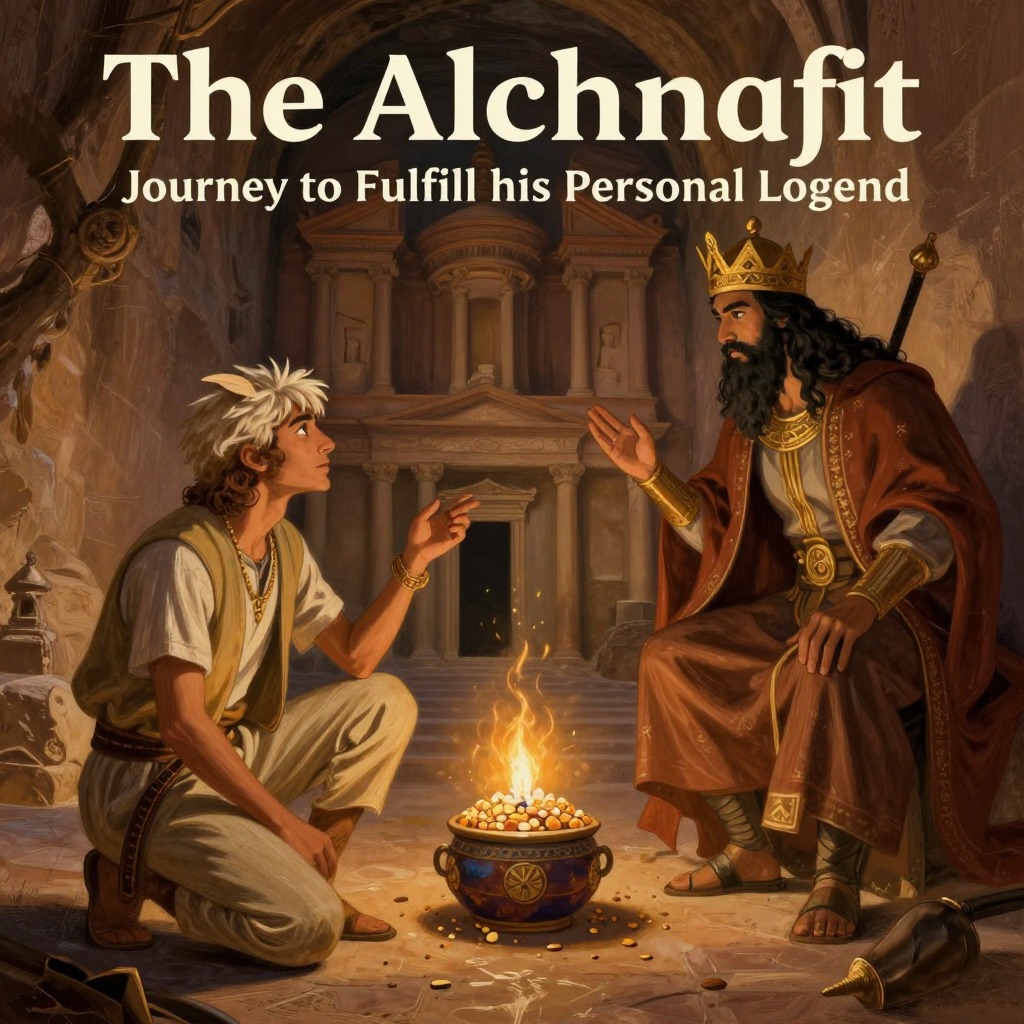
The Pyramids of Egypt stand as the geographical and symbolic terminus of Santiago's quest, the fixed point toward which every omen, trial, and transformation of his journey is oriented. They are the destination named in his recurrent dream—the place where a child transports him and promises a hidden treasure—and the goal that Melchizedek, the king of Salem, confirms when he tells the boy that the treasure lies "near the Pyramids." Though the Pyramids themselves appear only briefly in the narrative, they function as the central organizing symbol of the entire Personal Legend, the object that gives shape and purpose to every step Santiago takes across two continents.
The Dream and the Call
The Pyramids enter the story entirely through the language of dream and prophecy. In Santiago's recurring dream, a child takes him by both hands and transports him to the Egyptian Pyramids, where the child says, "If you come here, you will find a hidden treasure." The boy awakens both times before the exact location is shown. When the old woman interprets the dream, she tells him, "You must go to the Pyramids in Egypt," adding that she has never heard of them but that if a child showed them to him, they exist. Melchizedek later confirms the destination without elaboration: "It's in Egypt, near the Pyramids." From that moment, the Pyramids become the fixed coordinate of Santiago's destiny, the place where the universe is supposed to conspire to bring him.
The Journey as Approach
Santiago's entire trajectory across North Africa is structured as a gradual approach to the Pyramids, though the destination often recedes into the background. After the robbery in Tangier, the Pyramids become a painful memory he tries to avoid thinking about. When the crystal merchant dismisses them as "just a pile of stones" that anyone could build in a backyard, Santiago deflects the conversation. Even after he decides to join the caravan, the Pyramids are not mentioned again until the Englishman, upon seeing the oasis, exclaims that it looks like The Thousand and One Nights—a comparison that links the exoticism of the East to the Pyramids as its ultimate symbol. The alchemist, when he finally appears, tells Santiago that the Pyramids are surrounded by desert, and that finding life in the desert is the omen needed to proceed. The approach is not linear but spiral: every detour, every setback, every lesson learned brings Santiago closer to the moment when he will finally stand before them.
The Vision and the Revelation
When Santiago reaches the top of a dune after a month of travel from the oasis, the Pyramids appear at last: "illuminated by the light of the moon and the brightness of the desert, stood the solemn and majestic Pyramids of Egypt." The boy falls to his knees and weeps, thanking God for making him believe in his destiny and for leading him to meet a king, a merchant, an Englishman, and an alchemist. This is the moment of apparent culmination—the visual confirmation that the dream was true. Yet the Pyramids themselves yield no treasure. Santiago digs through the night where his tears fell, finding nothing but sand and rock. He is beaten by refugees from the tribal wars, and only when he tells them about his recurrent dream does the leader reveal that he, too, had a recurrent dream: of a treasure hidden at a ruined church in Spain where a sycamore grows out of the sacristy. The Pyramids, then, are not the site of the treasure but the instrument that forces Santiago to complete the circle. They are the mirror that reflects the true location back to the beginning.
Symbolic and Narrative Significance
The Pyramids function as a symbol of the apparent distance between a dream and its fulfillment. They represent the exotic, the monumental, the seemingly unreachable—the kind of goal that requires crossing an entire desert to attain. Yet the novel's final twist reveals that the treasure was always at the abandoned church in Andalusia, the very place where Santiago began. The Pyramids, in this light, are not a destination but a detour that makes the destination meaningful. They are the reason Santiago learns the Language of the World, meets Fatima, and transforms himself into the wind. Without the Pyramids as the ostensible goal, none of the journey's spiritual education would have occurred. The alchemist's proverb—"Every search begins with beginner's luck. And every search ends with the victor's being severely tested"—finds its literal enactment at the foot of the Pyramids, where Santiago is beaten and robbed before he learns the truth. The Pyramids are the place where the dream dies so that the real treasure can be found.
The Pyramids as a Test of Faith
The Pyramids also serve as a test of Santiago's commitment to his Personal Legend. When he first sees them, he considers returning to the oasis and living as a simple shepherd, having already learned all he needed to know. But he reminds himself that "no project is completed until its objective has been achieved." The scarab beetle that scuttles through the sand where his tears have fallen—a symbol of God in Egypt—confirms that he must dig. The beating he receives from the refugees is the final ordeal, the "victor's being severely tested" that the alchemist warned about. The leader's confession that he, too, had a recurrent dream about a treasure in Spain is the last omen, the one that finally makes the pattern visible. The Pyramids, by being the place where Santiago suffers and fails, become the place where he learns that the treasure was never in the destination but in the journey itself—and yet, paradoxically, the journey could not have been completed without the destination.